
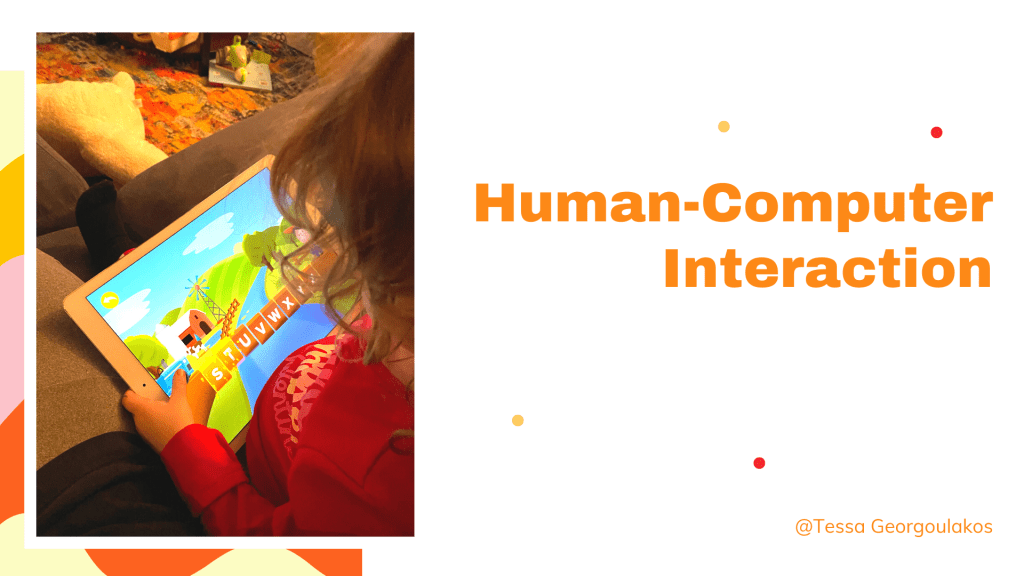
A field of study called human-computer interaction (HCI) focuses on how computers are made and how people interact with them. User-centered design (UCD), user interface (UI) design, and user experience (UX) design are overlapping subfields of the large topic of human-computer interaction (Design Foundation). Since the earliest computers made weren’t intended for the general public, it’s a recent field of study. Everyone now has access to computers, fast internet, smart phones, iPads, and other electronic devices. The fields of user design and human-computer interaction grew and expanded quickly. It’s now essential for designers to concentrate on making things simpler for how people (users) interact with computers (Design Foundation).
Human-computer interaction (HCI) is how people use and connect with technology.
In the recent decades, we have undergone a lot of change. Today’s minds must be capable of handling such changes in our rapidly evolving technological world. Design and the Elastic Mind, organized by Paola Antonelli, focuses on the idea that design is an interaction between people and technology. Paola Antonelli displayed numerous impressive works of design that include thought-provoking concepts intended to affect our future decisions. Her comment that our metaphysical realm is considerably larger than our physical area (Antonelli) piqued my interest. It’s true that technology connects us, but it also keeps us apart. Although all of Antonelli’s abstract design concepts were beautiful and practical, they didn’t seem to make it easier for us to interact with each other in the real world. The TEDTalk offers a serious perspective because all of this progress in science and technology seems to be approaching the point of diminishing returns. It defines the line between moving forward and moving backward.
We are evolving into a culture that values isolation and growth. It’s something to consider because it has the potential to benefit and harm society. We must not lose sight of the fact that those around us are equally complex beings. We need to pay closer attention to and be involved with our surroundings. The development of Pokemon Go is one example that I can think of that has a drawback. People were wandering around gazing at their phones, not paying attention to their surroundings while playing this phone game; which caused many injuries or fatalities.
Another example of HCI in action is virtual reality since, when done well, it may closely resemble the actual world. It offers the user a fresh perspective (Mishra); but what if that’s all someone decides to see? I am aware of individuals who use video games to “escape from reality.” But why do we need to run away from reality in the first place? Should we strive to connect technology and reality in our design work? I think efficient HCI will eventually be able to help with these challenges.
In order to consider these factors and make sure that the final outcome is safe, practical, and beneficial, human-computer interaction is essential. We need to be more attentive to sketch a fresh vision of the future of design.
Works Cited
Antonelli, Paola, director. Design and the Elastic Mind. Paola Antonelli: Design and the Elastic Mind | TED Talk, https://www.ted.com/talks/paola_antonelli_design_and_the_elastic_mind?subtitle=en. Accessed 2 Oct. 2022.
Design Foundation, Interaction. “What Is Human-Computer Interaction (HCI)?” The Interaction Design Foundation, https://www.interaction-design.org/literature/topics/human-computer-interaction.
Mishra, Utsav. “Human-Computer Interaction (HCI): Importance and Applications: Analytics Steps.” Human-Computer Interaction (HCI): Importance and Applications | Analytics Steps, https://www.analyticssteps.com/blogs/human-computer-interactionhci-importance-and-applications.
 Tech with Tess